Driver Recognition
Camera-assisted facial verification checks whether the person behind the wheel is an authorised user.
Hello Car combines AI-assisted driver recognition, encrypted identity verification and OBD-II vehicle control in one integrated security architecture.
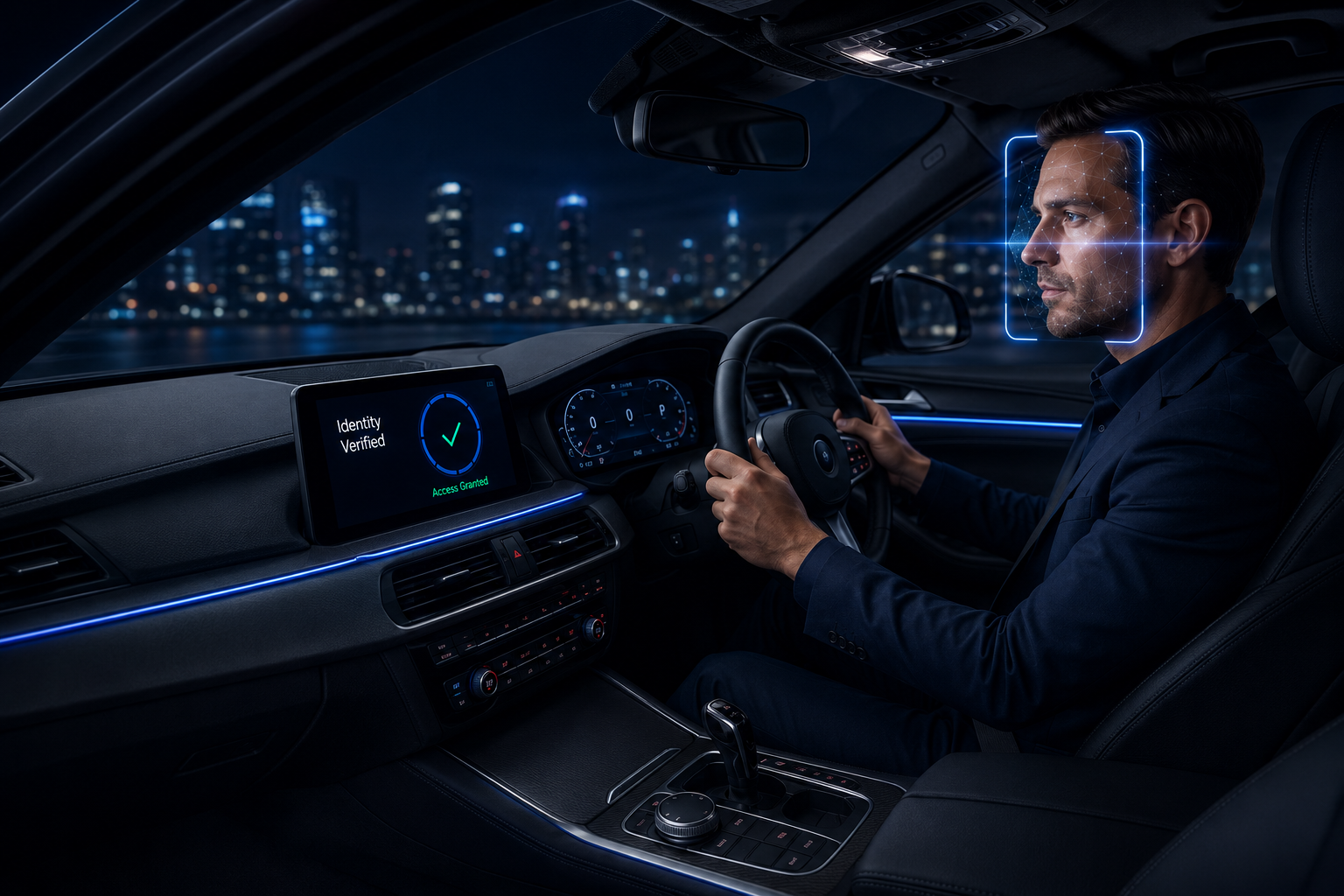
Camera-assisted facial verification checks whether the person behind the wheel is an authorised user.
The control unit communicates with vehicle data interfaces to support access and start authorisation workflows.
Identity and control data are transferred through encrypted communication and permission-based access logic.
Conventional vehicle security mainly focuses on possession of a key or remote signal. Hello Car introduces an additional identity layer before vehicle access is approved.
Physical access does not always confirm that the person entering the vehicle is authorised.
Modern theft methods can target wireless access signals without possessing the original key.
Drivers may receive information only after unauthorised access has already occurred.
Hello Car connects visual identity verification, a central processing unit and the vehicle interface through a controlled decision chain.
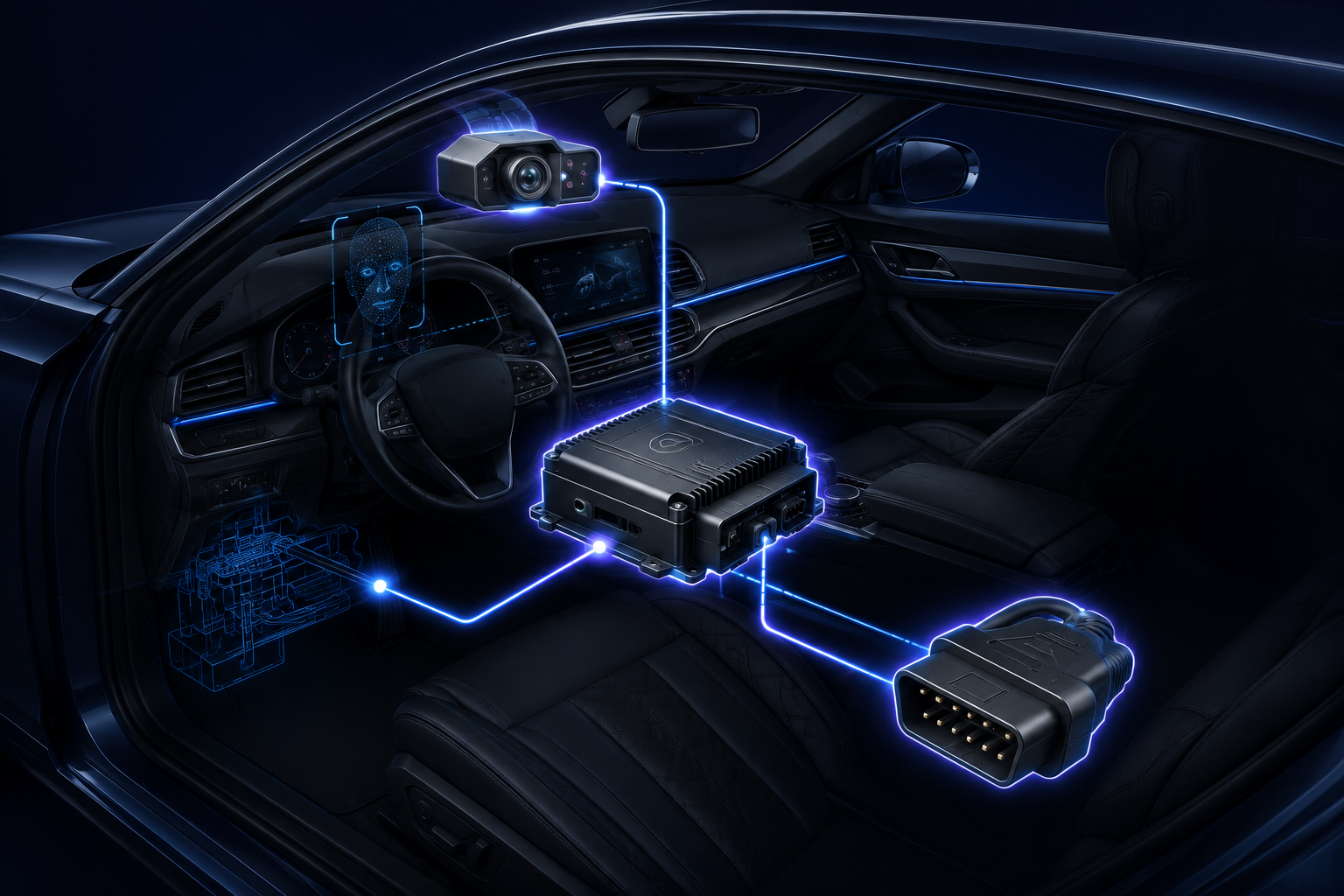
Captures the driver image for identity analysis, including low-light operating conditions.
Processes verification results, applies permission rules and manages system responses.
Provides the integration point for vehicle status data and approved access-control commands.
The camera captures the person entering or preparing to start the vehicle.
The system compares the detected driver with approved identity records.
The central unit validates the result against vehicle access rules.
Authorised users proceed; unauthorised activity can trigger a warning and protective response.
Clear driver capture supports more reliable visual identity analysis.
Verification is designed to occur during the normal vehicle access process.
The camera architecture is intended for nighttime and dim parking environments.
Identity and control messages are protected during system communication.
Suspicious access attempts can create immediate owner or operator notifications.
The architecture is designed around common vehicle interfaces for broader deployment potential.